
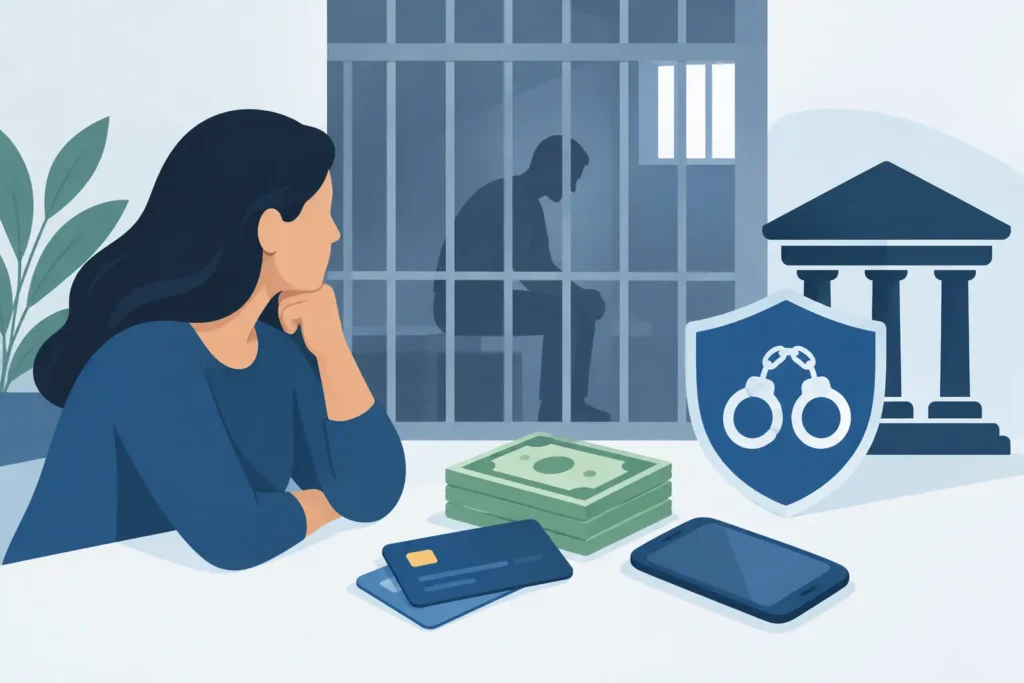
The call often comes at the worst possible time: late at night, during work, or when children are waiting at home. Your first concern is getting your loved one released safely, but the next question can feel just as urgent: how are you supposed to pay? Understanding your bail payment options can replace some of that panic with a clear plan.
The amount, payment method, and release process depend on the charge, the court, the jail, and the type of bond set. A local bail bond agency can explain the practical choices available for a specific situation, but no one should promise a release before the jail and court requirements are confirmed.
What Bail Is Actually Paying For
Bail is not a fine and it is not a payment that makes a criminal charge disappear. It is a financial condition set by a judge or court that is meant to encourage a defendant to appear for every required court date.
If the full bail amount is paid directly to the court or jail, that money may be returned after the case is completed, provided the defendant follows all court orders. Court fees, fines, restitution, or missed appearances can affect what is returned. Every case has its own rules, so ask the jail or court exactly where the payment is made and what conditions apply.
For many San Angelo families, paying the entire amount in cash is simply not realistic. That is where a surety bond, commonly called a bail bond, may be an option.
Common Bail Payment Options
Cash bail
Cash bail means paying the full amount set by the court directly to the appropriate government office. Depending on local procedures, accepted forms of payment may include cash, cashier’s check, money order, or another approved method. Do not assume a personal check or debit card will be accepted without asking first.
The main benefit is straightforward: there is no bail bond company involved. If the defendant attends court and meets the conditions of release, the court may return eligible funds after the case ends.
The trade-off is immediate cost. A $5,000 bail requires access to the full $5,000, and that money may remain tied up until the case is resolved. For a family already managing rent, groceries, transportation, and work obligations, that can create a serious hardship.
Surety bonds through a licensed bail bond agency
A surety bond allows a licensed bail bond agency to post a bond that guarantees the full bail amount to the court. Instead of paying the full amount yourself, you pay a bond premium and agree to the terms of the bond contract.
That premium is the agency’s fee for arranging the bond and is generally not refunded when the case ends. The defendant must still attend every court appearance and comply with any release conditions. Missing court is not a small mistake. It can result in a warrant, bond forfeiture, additional costs, and a much harder situation for everyone involved.
A surety bond can make release possible when full cash bail is out of reach. It also comes with responsibility. Read the agreement, ask what happens if a court date is missed, and make sure the defendant understands that staying in contact and appearing in court are essential.
Payment arrangements for bond premiums
Some bond agencies may offer payment arrangements for qualified customers rather than requiring the entire premium at once. The details vary based on the bond amount, the circumstances of the case, the signer, and the agency’s policies.
A payment plan can ease the immediate pressure, but it is still a financial agreement. Before signing, ask how much is due upfront, when future payments are due, what payment methods are accepted, and what happens if a payment is late. Clear answers matter when your family is making a decision under stress.
Do not let embarrassment stop you from asking. A respectful bondsman should explain the numbers plainly and discuss what may be workable for your situation.
Collateral when required
In some cases, especially when bail is high or the risk is greater, a bond agency may require collateral in addition to the premium. Collateral may include a vehicle title, real property, valuable personal property, or another asset, depending on the agreement and applicable law.
Collateral is meant to protect the agency if the defendant fails to appear in court. It is a serious commitment, not a formality. Ask what property is being pledged, how it will be documented, when it is returned, and under what circumstances it could be at risk.
Never sign over an asset you do not own or do not have authority to use. If several relatives are contributing, make sure everyone understands exactly what they are agreeing to before paperwork is completed.
Bail Payment Options Depend on the Type of Hold
Not every person in custody can be released through the same process. A local criminal charge, an out-of-county warrant, a probation hold, a parole hold, or an immigration detention matter may each have different rules.
If there is an active warrant, the amount may not be known until the warrant is confirmed. If a person is held without bond, there may be no payment option until a judge reviews the case. A bondsman cannot override a no-bond hold, erase a warrant, or decide the bail amount.
Immigration bonds are also handled differently from standard county criminal bonds. The detention location, federal procedures, and bond type can change what payment is required and who can pay it. Families dealing with immigration detention should seek accurate information early rather than assuming a county-jail process applies.
This is why a quick jail-record or warrant search can save valuable time. Before gathering money or asking relatives to commit to a payment, confirm where the person is being held, the exact charge or hold, whether bond has been set, and the total amount required.
Questions to Ask Before You Pay
In a crisis, it is easy to focus only on the fastest route out. Speed matters, but clarity protects your family after release. Ask whether the quoted amount is the full cost due today, whether collateral is needed, and whether the payment is refundable or nonrefundable.
Also ask what identification the signer needs to bring, whether the defendant has special release conditions, and how long release may take after a bond is posted. Posting a bond does not always mean a person walks out immediately. The jail still has its own booking, processing, and release procedures.
Be cautious with anyone who will not identify their agency, explain fees, provide paperwork, or answer basic questions about the agreement. A licensed, local agency should be able to speak clearly about the process without making guarantees it cannot control.
Keep the Release From Becoming a Bigger Problem
Once a loved one is released, save every document and write down every court date immediately. Put reminders in more than one phone, keep the bond agency’s information available, and notify the appropriate parties promptly if an emergency could affect a required appearance.
The best financial decision is not always the lowest payment due tonight. It is the arrangement your family can understand, honor, and manage while the case moves forward. Freedom Libertad San Angelo’s Bail Bonds is available 24 hours a day, 7 days a week to help local families understand the bond process with respect and straightforward answers.
When someone you care about is behind bars, take one calm step first: confirm the facts, ask what payment is required, and do not sign until the terms make sense. A clear conversation now can help your loved one get home and help your family face the next court date prepared.