
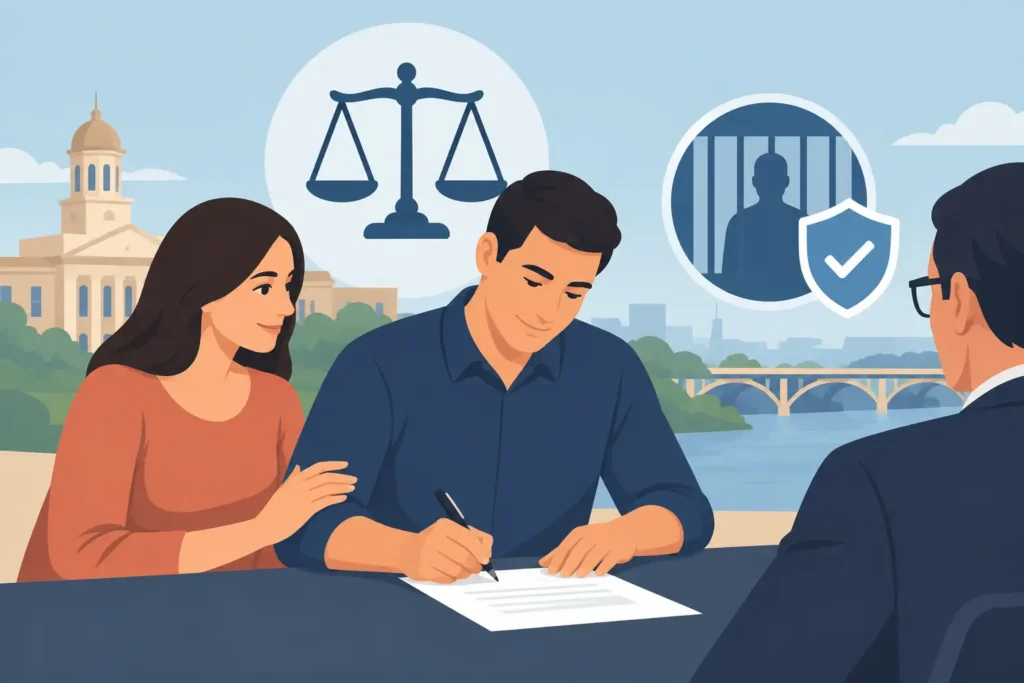
The phone rings late at night. Someone you care about is in the Tom Green County jail, the court has set bail, and they ask whether you can sign for them. Understanding who can cosign a bail bond can help you make a clear decision during a stressful moment. A cosigner is not simply doing a favor or filling out paperwork. They are accepting a serious financial responsibility for the defendant’s release.
In many cases, a relative, close friend, spouse, employer, or another trusted adult may qualify to cosign. Approval depends on the bond amount, the charges, the defendant’s history, and the cosigner’s ability to take responsibility if the defendant does not follow the court’s rules. A licensed bail bond agent can explain what is needed before anyone signs.
Who Can Cosign a Bail Bond?
A bail bond cosigner, sometimes called an indemnitor, is usually an adult with valid identification, a stable connection to the area, and enough financial ability to stand behind the bond. There is no rule that says only parents or spouses can cosign. The best person is often someone who knows the defendant well, can stay in contact with them, and understands the commitment involved.
For a lower bond, a trusted friend or family member may be acceptable. For a larger bond or a case with added concerns, the agent may need a cosigner with stronger financial resources, collateral, or a more established local residence. Every situation is different, so it helps to be honest about the details from the start.
Being related to the defendant does not automatically qualify someone, and not being related does not automatically disqualify them. What matters is whether the person can meet the bond agency’s requirements and accept the risk involved.
Common people who may qualify
A spouse, parent, adult child, sibling, grandparent, trusted friend, or employer may be able to cosign a bond. Someone who owns a home, has steady employment, or has a reliable income may have an easier time meeting financial requirements, especially when bail is high.
A person who recently met the defendant, has no dependable way to contact them, or cannot provide identification and proof of residence may have a harder time qualifying. This is not about judging anyone. It is about making sure there is a realistic plan for the defendant to appear in court and comply with every bond condition.
What a Cosigner Is Agreeing To
When you cosign a bail bond, you are promising that the defendant will appear at all required court dates and follow the terms of release. You may pay a fee to the bond agency, often a percentage of the full bond amount. That fee pays for the service of posting the surety bond and is generally not returned after the bond is posted.
The larger responsibility comes into play if the defendant fails to appear in court or violates key bond conditions. If that happens, the cosigner may be responsible for costs connected to locating and returning the defendant, as well as losses or obligations described in the bond agreement. If collateral was used, that property or asset could be at risk.
This is why a cosigner should never sign just because they feel pressured in the moment. Ask questions, read the agreement, and make sure you can realistically help the defendant keep track of court dates, transportation, phone calls, and any required check-ins.
A cosigner is not the defendant’s lawyer
Cosigning a bond does not make you responsible for defending the criminal case. It does not mean you can speak for the defendant in court, change court dates, or ignore the judge’s instructions. A criminal defense attorney handles legal advice and case strategy.
Your role is connected to the bond. You are helping secure release from custody while the case moves forward, and you are agreeing to cooperate if the defendant misses court or breaks the terms of the bond.
What You May Need to Bring
A bail bond agency will tell you what documents are required for the specific bond. Bringing the right information can prevent delays when time matters. Most cosigners should be ready to provide a government-issued photo ID and basic contact information.
Depending on the bond, the agency may also ask for proof of address, proof of employment or income, and information about the defendant. If collateral is needed, additional documentation may be required to show ownership and value. Examples can include vehicle titles, property records, or other assets accepted by the agency.
You may also need the defendant’s full name, date of birth, booking information, charge details, bail amount, and the jail where they are being held. If you do not have all of that information, a local bond agency may be able to help with a jail-record or roster search.
Do not bring original property documents or agree to collateral terms until you understand exactly what is being pledged, when it may be released, and what could happen if the defendant does not meet their obligations. Clear answers now can prevent painful confusion later.
When One Cosigner May Not Be Enough
Some bonds require more security than one person can provide. A large bail amount, prior missed court dates, out-of-county ties, or limited financial documentation can lead an agency to request a second cosigner or collateral. That does not always mean the bond cannot be arranged. It means the agency needs a stronger guarantee before taking on the risk.
Two cosigners should talk openly before signing. Each person needs to understand whether they are jointly responsible and what steps they will take if the defendant stops answering calls or fails to appear. Avoid assumptions such as, “I thought the other person was handling it.” Put the plan in plain language while everyone is present.
Before You Say Yes, Ask These Questions
A responsible cosigner should know the full bail amount, the premium or fee due, whether payment options are available, and whether collateral is required. Ask what court dates are currently scheduled, what conditions the defendant must follow, and what happens if a court appearance is missed.
It is also fair to ask what support the agency expects from you after release. Will you need to keep the defendant’s current address and phone number on file? Must you report a change in employment, travel plans, or contact information? Understanding these expectations helps protect both you and the person you are trying to help.
If the defendant has immigration concerns, multiple warrants, or holds from another jurisdiction, release may be more complicated than posting a standard local bond. A person can be eligible to cosign a bond and still face delays because another agency has a hold. Ask directly whether there are any additional warrants or detainers before making financial plans.
Protecting Your Loved One and Yourself
The strongest cosigner is not necessarily the person with the most money. It is the person who can be steady, informed, and realistic. If you know the defendant is likely to miss court, leave the area, or disregard restrictions, do not ignore those concerns because you want to help. A difficult conversation before signing is better than a financial crisis afterward.
On the other hand, people make mistakes, and an arrest does not erase the value of family support. When the defendant is committed to appearing in court, keeping in contact, and handling the case responsibly, a cosigner can provide a meaningful path home while the legal process continues.
Freedom Libertad San Angelo’s Bail Bonds is available 24 hours a day, 7 days a week to explain bond requirements, help locate booking information, and speak plainly about what cosigning may involve. If you are considering signing for someone, take a breath, get the facts, and make a decision you can stand behind after the urgency of the moment has passed.