
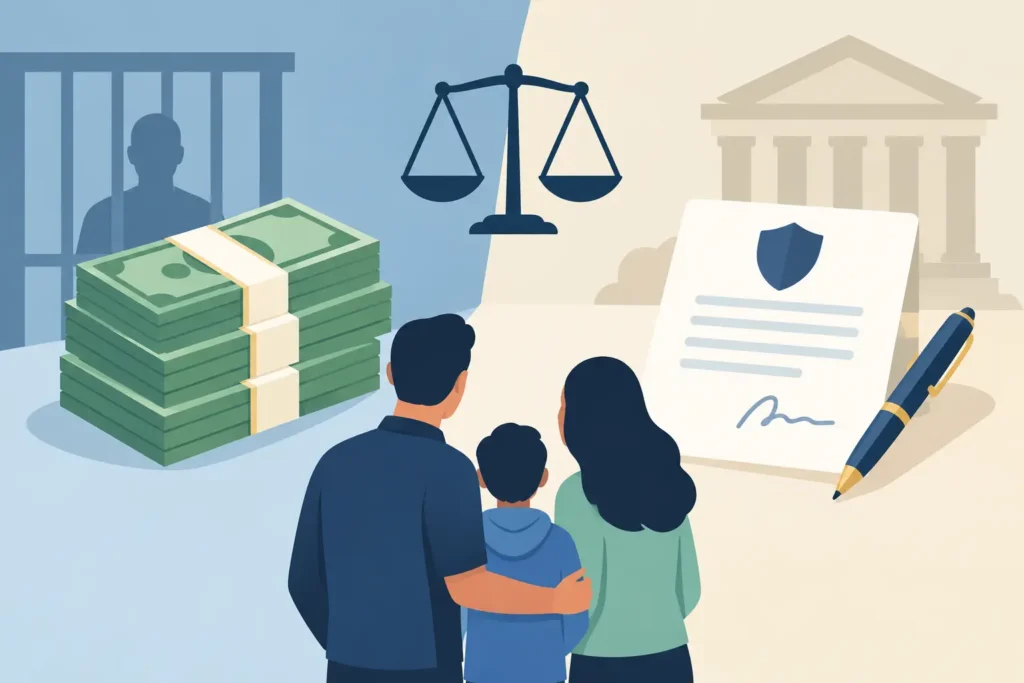
The call usually comes at the worst possible time: someone you love has been arrested, they are in jail, and the court has set a bond amount you cannot ignore. When families compare cash bail versus surety bond, the question is rarely academic. They need to know what will get their person released, what money is required now, and what responsibility follows after release.
In San Angelo and throughout Tom Green County, the right choice depends on the bond amount, your available funds, the court’s conditions, and whether the jail will accept the bond option in that case. A licensed local bondsman can explain the process clearly, but the final decision belongs to the court and the people signing the paperwork.
Cash Bail Versus Surety Bond: The Basic Difference
Cash bail means the full bond amount is paid directly to the court or jail, following that agency’s approved payment process. If the judge sets bond at $5,000, a cash bond generally requires access to the full $5,000. The money is held as security to encourage the defendant to appear at every required court date and follow all bond conditions.
A surety bond is different. Instead of the family paying the entire bail amount to the court, a licensed bail bond agency guarantees the full amount to the court. The person arranging the bond pays the agency a fee, often called a premium, plus any agreed-upon collateral or payment arrangement when applicable. The agency then posts the surety bond so the defendant can be released if the jail completes processing.
Both options are designed to accomplish the same immediate purpose: secure release while the criminal case moves through court. The major difference is where the financial burden falls and how much cash must be available upfront.
When Paying Cash Bail May Make Sense
Cash bail can be an option for a family that has the entire amount available and is comfortable having those funds tied up during the case. Some people prefer paying the court directly because they do not need a bondsman or a separate bond agreement.
If all court appearances are made and all requirements are met, cash bail may be eligible to be returned after the case is resolved. That does not necessarily mean every dollar comes back. Courts may apply authorized costs, fines, fees, restitution, or other obligations according to the case and local rules. The timing of any return can also depend on when the court finalizes the matter.
The biggest challenge is simple: cash bail requires the full amount. A $10,000 bond is not a $10,000 inconvenience for most households. It can mean draining savings, borrowing from relatives, postponing rent or bills, or losing access to money needed for everyday life while the case is pending.
Cash bail also does not make the case disappear or reduce the defendant’s obligations. The person released must still attend court, avoid new violations, follow any no-contact order, check-in requirement, travel restriction, or other condition set by the judge.
How a Surety Bond Works for Families
A surety bond can make release possible when paying the full bail amount in cash is not realistic. The bail bond agency reviews the situation, confirms the bond information, explains its agreement, and works to post the bond once the necessary paperwork and payment arrangements are complete.
The fee paid to a bail bond agency is generally not refunded simply because the defendant goes to court or the case is later dismissed. It is payment for the agency’s service and financial guarantee. That is one reason families should ask direct questions before signing: What is due now? Is collateral required? Who is responsible for the defendant? What happens if a court date is missed?
The signer, often called an indemnitor or co-signer, takes on real responsibility. By signing, that person agrees to help ensure the defendant follows the bond terms and appears in court. If the defendant fails to appear, the court may forfeit the bond, and the agency may take steps allowed by the agreement and Texas law to locate the defendant or seek reimbursement from responsible parties.
That responsibility should not scare families away from asking for help. It should encourage an honest conversation before the bond is posted. A reputable local agency will explain the commitment in plain language instead of rushing people through paperwork they do not understand.
A Simple Cost Example
Suppose a judge sets a $15,000 bond. With cash bail, the family may need to pay the full $15,000 to the court, subject to the court’s rules and payment methods. With a surety bond, the family pays the bail bond agency’s agreed fee and may discuss collateral or payment options depending on the circumstances.
The surety bond may reduce the cash needed immediately, but it is not free money and it is not a loan from the court. The defendant must still comply with every condition, and the co-signer must understand what they are agreeing to.
Questions to Ask Before You Choose
The stress of an arrest can make any fast answer sound like the right answer. Take a moment to get the facts. First, confirm the exact jail location, the defendant’s full name, the charge, and the bond amount. A jail-record or warrant search may help clarify what is happening when information is incomplete.
Then ask whether the bond is cash-only or whether the court will allow a surety bond. A cash-only bond cannot simply be replaced with a standard surety bond. Bond types and release conditions are determined by the court, and those details matter.
If a surety bond is permitted, ask the agency to explain the total initial cost, payment expectations, required identification, collateral requirements, and the co-signer’s duties. If you are considering cash bail, ask the court or jail how payment is accepted and how the release of funds works after the case ends.
Do not sign for someone based only on pressure from other people. Sign because you understand the defendant’s plan for getting to court, staying in contact, and following the judge’s orders. For many families, a missed court date creates more trouble than the original late-night arrest.
What Happens After Release Matters Most
Getting out of jail is the urgent first step. Staying out and appearing in court is the responsibility that follows. The defendant should keep every court document, write down hearing dates immediately, and tell their attorney and bondsman about changes in phone number, address, work schedule, or transportation.
A person released on bond should never assume a case is over because they have left jail. Missing a court appearance can lead to a warrant, a revoked bond, another arrest, and serious financial consequences for the person who signed the bond agreement.
Families can help by creating a simple plan before release: confirm transportation home, save court dates in more than one place, and make sure the defendant understands any restrictions. Those practical details protect both the defendant and the people who stepped forward to help.
Local Help When the Situation Cannot Wait
Every bond situation is different. A lower bond may make cash bail workable for one family, while a higher bond makes a surety bond the more realistic route for another. The answer depends on the court order, your financial position, and the level of responsibility you can reasonably accept.
Freedom Libertad San Angelo’s Bail Bonds is available 24 hours a day, 7 days a week to help local families understand bond information, paperwork, and next steps. A calm conversation with a licensed professional can replace confusion with a clear plan when time matters most.
If someone you care about is in jail, start by confirming the bond details, ask honest questions, and choose the option you can manage responsibly. Fast help matters, but so does making a decision that supports your family long after the jail door opens.