
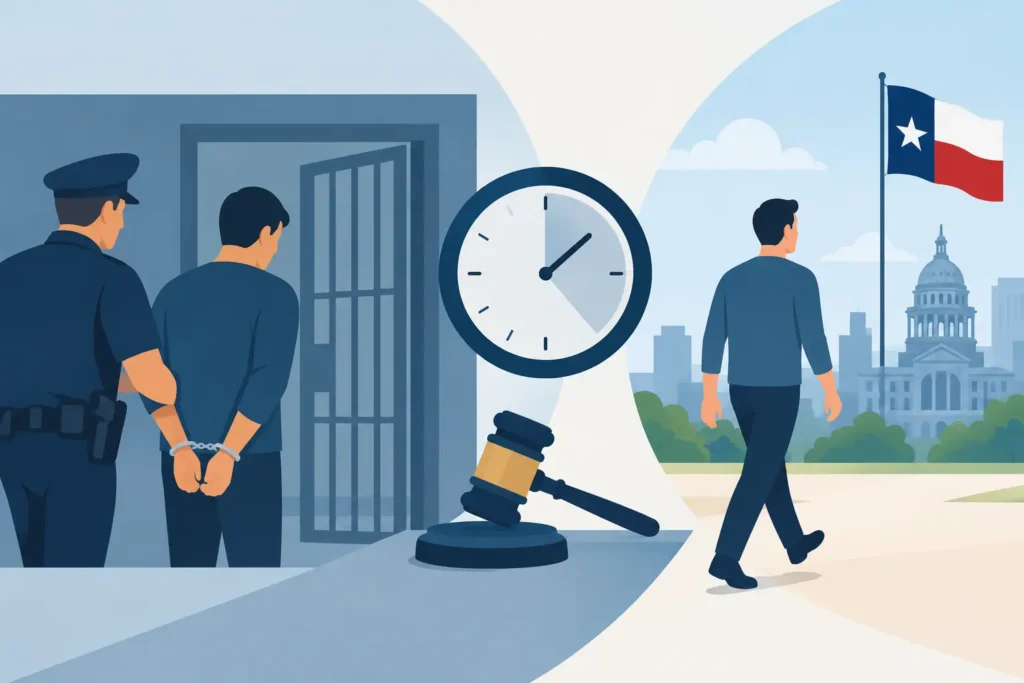
A loved one has been arrested, and every minute feels longer than it should. So, how long does bail release take in Texas? There is no single guaranteed answer, but many releases happen within a few hours after bail is set and all paperwork is accepted. In some cases, it can happen faster. In others, jail workload, court schedules, holds, or missing information can extend the wait.
The most helpful thing you can do is start with accurate information and work with someone who understands the local process. A calm, quick response can prevent avoidable delays when your family needs answers right away.
How Long Does Bail Release Take in Texas Jails?
For a straightforward case, the release process may take roughly two to six hours after a bond has been posted. That estimate includes the jail’s time to receive the bond, verify it, complete release paperwork, return personal property, and physically process the person out of custody.
However, the clock does not always start at the arrest. If the person is still being booked, waiting to see a magistrate, or waiting for bail to be set, release cannot move forward yet. An arrest late at night, on a weekend, or during a busy shift can also add time.
A bail bond agency can help arrange the bond promptly once the bail amount is known, but the final release timing belongs to the jail. No honest bondsman should promise an exact release time, because jail staff must follow their own security and processing procedures.
What Has to Happen Before Someone Can Be Released?
The path from arrest to release usually has several steps. First, law enforcement brings the person to jail for booking. Booking can include identity verification, fingerprints, photographs, property inventory, and an initial review of the alleged charge.
Next, a judge or magistrate sets bail, unless a bond amount is already available under a local bond schedule. Once the amount is set, the defendant, a family member, or a friend may pay cash bail directly to the proper authority or work with a licensed surety-bond agency.
After the bond is posted, jail personnel verify that the paperwork is complete and check for any reason the person cannot be released. Then they finish the jail’s release procedures. Even when the bond is handled quickly, this final stage can take time, especially when staff are managing multiple releases, new arrests, meals, shift changes, or security concerns.
Why Bail Release Can Take Longer Than Expected
A delay does not automatically mean something has gone wrong. Often, it means one part of the process is still moving through the system. The most common issue is that bail has not been set yet. Until there is a bond amount and the proper authority has approved release eligibility, a bondsman cannot post a bond.
Jail volume matters too. A busy county jail may be processing new arrests, court transports, medical checks, and releases at the same time. Weekends and overnight arrests can be especially unpredictable. Staff members have to process each person correctly, not simply open a door after a payment is made.
Holds can create a more serious delay. A person may have an outstanding warrant, a probation or parole hold, an immigration hold, a hold from another county, or multiple cases with separate bond requirements. Posting bond on one charge does not necessarily release someone who has another active hold.
Paperwork issues can slow things down as well. Incorrect names, dates of birth, case numbers, missing signatures, or uncertainty about who will act as the indemnitor can all require clarification. Providing complete, accurate information early helps avoid that kind of back-and-forth.
Medical and Safety Procedures May Add Time
If a person needs medical attention, medication review, or a safety assessment, the jail may need to complete that process before release. This can be frustrating for families waiting outside, but it is part of the jail’s responsibility to release people safely.
The person being released may also need to change out of jail clothing, receive property, sign forms, and arrange transportation. If possible, make sure someone is ready to pick them up once the jail confirms release.
How a Bail Bondsman Can Help Move Things Forward
A licensed bail bondsman does not control the jail, the judge, or the release queue. What they can do is help you understand what is needed, prepare the bond documents correctly, explain the financial agreement, and post the surety bond as soon as the case is ready.
That guidance matters when you are trying to make decisions under pressure. Families are often unsure which jail is holding their loved one, whether a warrant is involved, how much the bond is, or whether a cash bond is required. A local agency can help check available jail and warrant information and explain the next practical step.
A surety bond generally means the bonding agency guarantees the full bail amount to the court, while the person signing for the bond agrees to the agency’s terms. The premium paid for the bond is a fee for that service and is not usually returned at the end of the case. Depending on the circumstances, collateral or a co-signer may be required.
Ask questions before signing. You should understand the payment arrangement, the defendant’s court obligations, what happens if a court date is missed, and what information the agency needs from you. Clear expectations protect everyone involved.
Information to Have Ready When You Call
Having a few details ready can save valuable time. If you do not know every answer, do not panic. Start with what you have, and a local bondsman can help you identify the missing pieces.
- The detained person’s full legal name and date of birth
- The jail or county where the person may be held
- The charge, case number, or booking number, if available
- The bail amount or any information you received from the jail
- Your identification, contact information, and ability to sign bond paperwork
If you are calling for someone else, be careful not to rely on rumors or social media posts. Names can be similar, charges can be misunderstood, and bond amounts can change as cases are reviewed. Confirm information through the proper channels before making financial decisions.
What Families in San Angelo Should Expect
In San Angelo and Tom Green County, timing can vary based on when the arrest occurred, the jail’s current workload, the nature of the charge, and whether the person has any additional holds. The local advantage is simple: working with an agency that knows the area can make it easier to get a straight answer about what should happen next.
Freedom Libertad San Angelo’s Bail Bonds is locally operated and available 24 hours a day, 7 days a week to help families who are facing this situation without warning. Whether you need help understanding a bond amount, checking on a possible warrant, or preparing the documents needed for a surety bond, respectful guidance can bring order to a stressful night.
Questions Families Often Ask About Texas Bail Release
Can someone get out of jail immediately after bond is posted?
Sometimes, but not always. Posting the bond begins the release process. The jail still has to verify the bond, check for other holds, complete paperwork, and process the person out. A quick release is possible when the jail is not busy and there are no complications, but several hours is common.
Does paying a cash bond make release faster?
Not necessarily. A cash bond and a surety bond both must be accepted and processed by the jail. Cash bail may be the required option in some cases, while a surety bond may be available in others. The best choice depends on the court’s order and your family’s circumstances.
What if my loved one has more than one charge?
Each charge may have a separate bail amount, and all eligible bonds may need to be addressed before release. If one charge has no bond, a separate hold, or a warrant from another jurisdiction, the person may remain in custody even after another bond is posted.
When someone you care about is in jail, the waiting is hard enough without guessing what comes next. Get the correct name, location, and booking details, ask direct questions, and take the next available step. A clear plan can make a difficult situation feel more manageable while the jail completes the release process.